
Accountability for Higher Performance® (AFHP) - Workplace Accountability Training
The vast majority of performance issues inside an organisation have nothing to do with skill. When a deadline is missed, a handover goes wrong, or a target is quietly adjusted instead of met, the team could easily have done what was expected - it simply didn't take ownership of the result. AFHP is built to close exactly that gap, working on your organisation's own real results rather than a hypothetical case study.

Brands We've Worked With















What is the AFHP Program?
An accountability training program is not a lecture on personal responsibility, delivered once and then forgotten by the following Monday. Accountability for Higher Performance® (AFHP) is a high-energy, experiential workshop that gives participants the understanding and the tools needed to create greater accountability in the workplace, while working on the organisation's own actual results rather than a generic hypothetical case study.
Participants apply the principles from the Ladder of Accountability and practise the Steps to Accountability needed to move a real result forward, so the workshop produces a plan for an actual deadline or target, not just a shared vocabulary for talking about one.
The central idea is straightforward: people need the ability to take responsibility for themselves and work together as a team toward a common goal, without falling into blaming each other the moment something goes wrong. AFHP equips people with the practical means to build that kind of accountability at every level of the organisation, from the newest team member to the executive team.
That range matters because accountability gaps rarely sit in one layer of an organisation. A frontline team that has learned to own its numbers can still stall if the layer above it keeps quietly adjusting targets instead of meeting them, which is why AFHP is designed to work across levels rather than as a fix aimed at a single group.
Why Accountability Training Matters for Organisations
Accountability in the workplace is usually invisible until it's missing. When it's present, deadlines get met, problems surface early, and people ask "what more can be done" rather than "whose fault is this." When it's absent, the same missed target gets explained away every quarter with a slightly different reason, and nobody in the room actually owns the fix.
Organisations without an effective accountability training program tend to develop what this workshop calls the Blame Game - a pattern where the energy that could go into solving the problem gets spent instead on proving that no one in the room is responsible for it. It's an expensive habit precisely because it never shows up as a single line item on any one quarter's numbers; it accrues quietly as the team gets better and better at explaining outcomes instead of changing them.
This is precisely why workplace accountability training has become a leadership priority rather than a one-off HR initiative. A single skilled manager can drive results through sheer personal effort for a while, but organisation-wide accountability is what allows results to hold up even when that manager is stretched thin, on leave, or has moved into a different role.
Put differently, accountability training is what an organisation invests in when it wants results that don't depend on any one person's presence in the room. Once ownership is distributed across a team rather than concentrated in a single manager, a stretched-thin quarter, a resignation, or a reorganisation stops being enough to derail a result that mattered.
The Ladder of Accountability Framework
Ownership and Accountability: Why the Ladder Model Works
Ownership and accountability are treated as two related but distinct ideas inside this framework, and the Ladder of Accountability is the tool participants use to tell them apart in the moment, without turning the conversation personal.
Ownership is the ability to be accountable for something before a problem ever emerges - the mindset that keeps a commitment on track without anyone needing to check in on it. Accountability, by contrast, is what a team draws on once a result doesn't match up, and a group has to decide honestly whether the gap should be explained away or corrected.
The Ladder of Accountability gives participants a shared, visual way to place any reaction, their own or someone else's, somewhere between denial at the bottom and full ownership at the top. Positions lower on the ladder typically look like denying a problem exists, blaming a colleague or circumstance, or offering excuses and waiting to see if the issue resolves itself on its own; positions higher up look like acknowledging the result honestly and taking active ownership of the fix.
The value of naming these positions explicitly is practical, not academic. It gives a manager language to point at a specific rung of the ladder - "that response sits closer to blame than ownership" - rather than making a judgement feel personal. A team that shares this vocabulary can name where a conversation has drifted without the conversation itself turning into another argument about who's at fault.
How AFHP Builds a Culture of Accountability
The RESM Process: Four Steps to Ownership
This part of the program is based on a four-part process - Acknowledging the Reality, Embracing the Reality, Discovering Solutions, and Implementing the Solution - referred to throughout the workshop as the RESM steps. Rather than treating accountability as an abstract concept printed on a poster in the break room, AFHP walks participants through the RESM process using a real, current business situation drawn from their own organisation.
Acknowledge the Reality
Participants start by facing the actual, current state of a result exactly as it stands, before any conversation about who is responsible or what should happen next.
Embrace the Reality
The group moves from acknowledging a gap to genuinely owning it, treating the result as something the team is responsible for changing rather than a problem that belongs to someone else.
Discover Solutions
Energy that would otherwise go into the Blame Game gets redirected into generating real options, with the group working from the assumption that a fix exists and is worth finding.
Implement the Solution
Every RESM cycle closes with a specific, owned action tied to a name and a date, not a general commitment to "do better" that quietly evaporates by the following week.
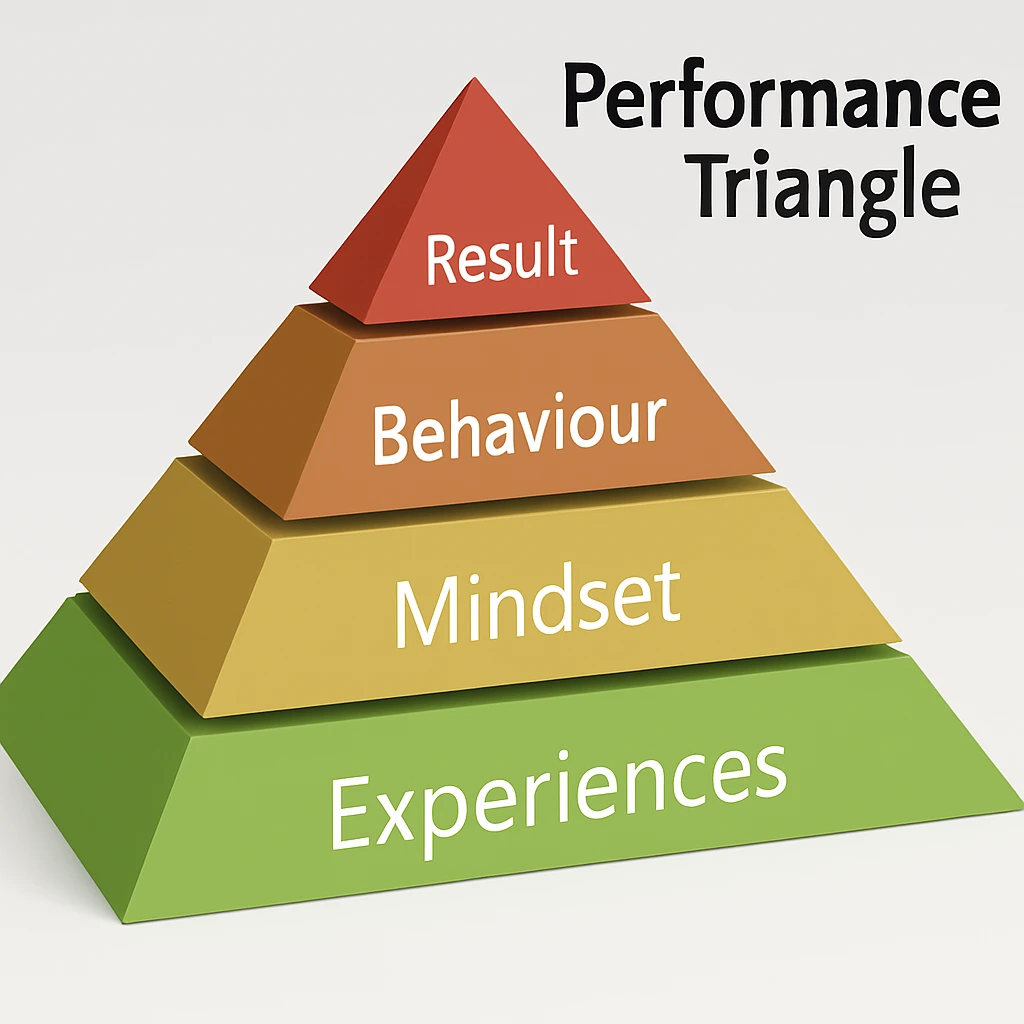
The design of AFHP rests on a simple but consequential assumption: culture produces results, and current results are produced by current culture. If leadership wants a different outcome, the answer isn't to demand harder effort inside the same culture; it's to create new experiences that reinforce the mindsets the organisation actually needs, and to deliberately remove the experiences that keep reinforcing the old ones.
A culture of accountability doesn't take hold after one inspiring workshop day, no matter how well it's run. It develops through the continuous creation, and removal, of conditions that make it easier or harder for employees to take ownership of their actions. That's why AFHP treats the workshop as one stage in a longer process - a culture assessment beforehand, the workshop itself, and a 30-60-90-day follow-through afterwards - rather than the entire intervention.
nPAS Diagnostic - Measuring Accountability
Before the workshop itself, AFHP begins roughly fifteen days out with the nPAS diagnostic, an assessment of the organisation's current culture that measures mindsets against sixteen specific accountability behaviours. In parallel, one-on-one interviews are conducted with a set of key individuals to understand the organisation's current results and how aligned people actually are around them, rather than how aligned they're assumed to be.
Because the diagnostic stage does this work first, the workshop day itself addresses the organisation's real, current gaps instead of a generic script written for a different company entirely. The sixteen behaviours the nPAS diagnostic measures aren't weighted identically everywhere either; which of them matter most, and how they show up, shifts depending on the sector and the specific team in the room.
Most culture change training available in India defaults to general values workshops that don't reference the client's existing culture at all. DTCI's approach is different in a concrete, checkable way: the nPAS pre-workshop assessment against sixteen accountability behaviours, paired with one-on-one interviews with selected individuals, ensures the program is shaped around the client's actual gaps before the workshop ever begins.
As a BYLD Group company, DTCI brings the same consulting depth to this program that it applies across its wider portfolio of sales, leadership, and culture-management work. The 30-60-90-day follow-through is treated as a core part of the engagement, not an optional add-on that quietly disappears from scope once the invoice is settled, which is where many generic vendors stop.
Who Should Attend This Accountability Workshop
This accountability workshop corporate program is built for managers and leaders accountable for their team's performance, employees at every level who want a shared language of ownership, and organisations that want to drive change through culture transformation rather than patch the performance problem of a single team in isolation. Because the program starts from the organisation's real results and its actual culture assessment, it holds up equally well for a first-line manager and for the top leadership team in the same room.
Sales, Operations, and Support functions tend to see the most immediate benefit, since a failure of accountability shows up almost immediately as a missed deadline or a broken service-level commitment. But the same underlying premise applies just as much to functions like Strategy, Culture, and Collaboration, where accountability is harder to measure directly and a broken promise usually traces back to unclear ownership rather than a lack of effort.

Program Design & Duration
AFHP is available as a one-day in-person classroom workshop or a six-hour virtual program, so the format fits the team's schedule and location rather than forcing a single delivery model on every organisation. Both formats are built around the same nPAS diagnostic, the same RESM process, and the same real business results - differing only in delivery, not in substance.
In-Person Format
Delivered as a one-day classroom workshop featuring interactive activities, one-on-one coaching, and blended learning elements. The diagnostic phase begins approximately fifteen days before the workshop to ensure the content is tailored to the organisation's needs.
Virtual Format
Delivered as a six-hour live online program with webinars, coaching sessions, online courses, and interactive exercises. The pre-program diagnostic and stakeholder assessment are conducted in advance to create a relevant and personalised learning experience.
Interactive Activities
Hands-on exercises built around a real business result.
Blended Learning
A mix of classroom, coaching, and self-paced elements.
Webinars
Live online sessions for distributed teams.
Online Courses
Self-paced modules reinforcing each model.
Theory Inputs
Concept sessions behind the Ladder and RESM steps.
Business Impact - Results from AFHP
Five Capabilities Every Participant Builds
Participants who complete this accountability training program walk away with five specific, checkable capabilities, rather than a vague sense of having "talked about accountability" for a day.
Clarity, Alignment and Ownership of Key Results
Ensuring clarity, alignment, and ownership of key results across the team or organisation, so results have a named owner rather than a shared, diffused responsibility.
A Positive Approach to Accountability
Introducing a positive approach to building greater accountability throughout the organisation, rather than one built on fear of consequences.
Greater Ownership Using the Ladder
Creating greater ownership of key results using the Ladder of Accountability as a shared, non-personal way to name where a response sits.
Tools That Accelerate Accountability
Applying tools and practices that accelerate accountability both individually and organisationally, well beyond the day of the workshop itself.
A Personal Accountability Plan
Developing specific action steps using an accountability plan that becomes the foundation for a lasting culture of accountability.
These capabilities show up in the very next missed deadline or dropped handover, not as abstract theory that only sounds good on a feedback form - whether that's a frontline team owning a service-level slip before a customer escalates it, or a leadership team finally agreeing on who owns a cross-functional target that had quietly belonged to no one.
How Accountability Gaps Show Up by Industry
Though the nPAS diagnosis and the RESM steps stay consistent, the way accountability gaps show up, and the results AFHP drives, vary by industry.
Breaches That Go Unreported
In manufacturing and operations, accountability issues surface as safety or quality breaches that go unreported or ignored out of fear, rather than a lack of process knowledge.
Process Followed, Result Unowned
In BFSI and other compliance-heavy industries, accountability shows up as strict adherence to process without anyone taking responsibility for the actual result the process was meant to protect.
"Not My Team" at the Handoff
Faults and delays get pushed onto the other team instead of being owned, especially across handoffs between functions with no single named owner.
Fastest, Most Visible Return
Failures in accountability surface fastest here, in missed deadlines and broken service-level commitments, making these functions the ones that typically see the most immediate return from the program.
Participant Testimonials
Real outcomes, in the words of the leaders and organisations we've worked with, on the same coaching and capability-building rigour that underpins this program.
HMIL partnered with BYLD for the Group Coaching sessions under TrailBlazHer, HMIL's women leadership development program, and the experience was highly impactful. The two coaches assigned by BYLD demonstrated strong expertise, empathy, and a structured coaching approach that resonated well with the participants. The sessions created a safe and engaging space for reflection, learning, and actionable development discussions. Overall, the coaching intervention added meaningful value in building self-awareness, confidence, and leadership capabilities among the participants, and we truly appreciated BYLD's professional partnership and delivery.
FAQs - Accountability Training
Answers to the questions L&D heads and business leaders most often ask before enrolling their teams.
How does the program define clear expectations?
Clear expectations are specific, measurable, achievable, relevant, and time-bound, giving individuals and teams a precise understanding of what's expected of them so their efforts stay aligned with organisational goals.
What is meant by ownership in the context of this accountability training program?
Ownership means taking responsibility for meeting the expectations that have been clearly set. Within this accountability and performance program, that means developing a proactive approach to fulfilling commitments and delivering results rather than waiting to be asked.
How are consequences managed within this program?
Accountability in the workplace comes with both positive and negative consequences, and both matter. Positive consequences, recognition and reward, motivate people to meet expectations, while negative consequences, direct feedback and coaching, help course-correct behaviour before it becomes a pattern.
What is the Ladder of Accountability, and how does it work?
The Ladder of Accountability is a core component of this program, giving participants a framework for recognising and managing accountability in the workplace, from lower, blame-oriented responses up to genuine ownership of a result.
How is this different from a generic accountability workshop corporate program?
Most generic programs teach the concept of accountability without connecting it to the organisation's actual current culture. This organisational accountability program begins with the nPAS assessment of sixteen specific behaviours and one-on-one interviews with key people, so the workshop addresses the organisation's real gaps rather than a hypothetical case study.
Does this workplace accountability training include follow-up after the session?
Yes. A 30-60-90-day evaluation plan tracks whether the cultural shift is actually taking hold after the workshop, since a culture of accountability is built through sustained reinforcement rather than a single one-day event.
Is this AFHP program customised to our organisation, or delivered as a fixed template?
It is customised. While the RESM steps and the Ladder of Accountability stay constant, the nPAS pre-workshop culture assessment and stakeholder interviews are specific to each client, so the workshop content reflects the organisation's actual results and current culture rather than a generic script.
Who benefits most from this accountability training program?
Managers and leaders responsible for team results, employees at every level, and organisations looking to shift their broader accountability culture all benefit, since the shared vocabulary and framework work best when reinforced across multiple levels of the organisation at once.